

The science, in short
How redlight works.
Three numbers describe any light device: which light it emits, how much of it reaches you, and for how long. Here is what each one means, so you can compare devices and decide for yourself.
nanometres (nm)
How deeplight reaches.
Wavelength is the colour of the light. Shorter wavelengths, like blue, are absorbed near the surface of the skin. Longer wavelengths, like red and near-infrared, scatter less and travel further before they are absorbed. Tap a wavelength to see roughly where it ends up.

Illustration, not to scale. Real depth varies with skin tone, skin thickness, body area and the device.
mW/cm²
How muchreaches you.
Irradiance is the light power landing on each square centimetre of your skin. It depends on the device and, just as much, on your distance from it. Move closer and more light lands on a smaller area. Step back and the light spreads over more of your body, but each spot receives less.
Drag to move. Values relative to 6 in, to show the principle. Not measured values for any device.
Distance changes everything
The same panel gives a very different irradiance at 6 inches than at 24 inches. A figure without a stated distance tells you little.
Brands measure differently
Meters, distances and methods vary between brands, so irradiance numbers from different companies are rarely directly comparable.
Use the manual's distance
Each device's quick-start guide gives a recommended distance. That is the setup the session times are written for.
Irradiance× time.
Dose, also called energy density, is how much light energy a spot of skin receives in one session. It is measured in joules per square centimetre (J/cm²) and comes from two things you control: how close you are and how long you stay.
Research describes a biphasic dose response: too little light may do little, and more is not automatically better. That is why session times and distances in the manual matter as much as any spec.
Dose (J/cm²) = irradiance (mW/cm²) × time (seconds) ÷ 1000
Example numbers to show how the formula works. They are not a recommendation. Follow the session times in your device's guide.
What happensin your cells.
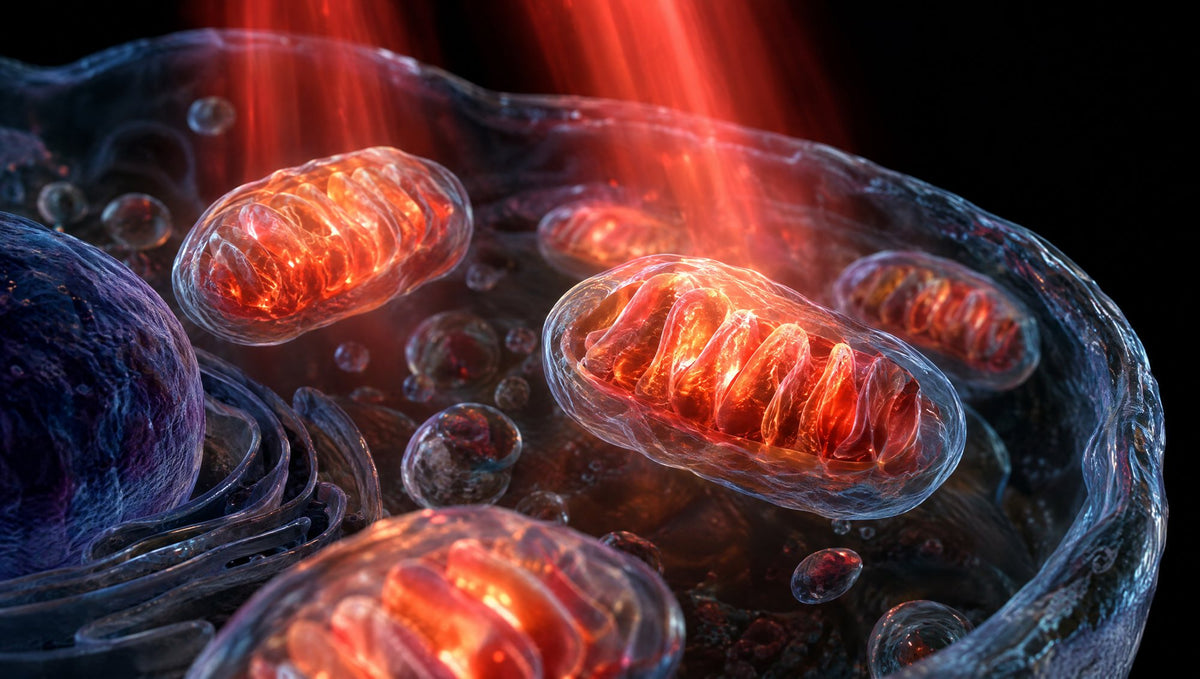
The cell takes in the light
Almost every cell has mitochondria, the small parts that make its energy. They contain a molecule that absorbs red and near-infrared light.
The cell reacts
In studies, cells change how they produce energy and send signals after absorbing this light. The research field is called photobiomodulation.
The settings matter
Studies get different results with different wavelengths, intensity and session length. That is why the three numbers above matter.
wavelengths
Which lighteach device emits.
| Device | BlueVisible | RedVisible | NIR* 810–850Not visible | NIR* 900–940Not visible | NIR* 1064Not visible |
|---|---|---|---|---|---|
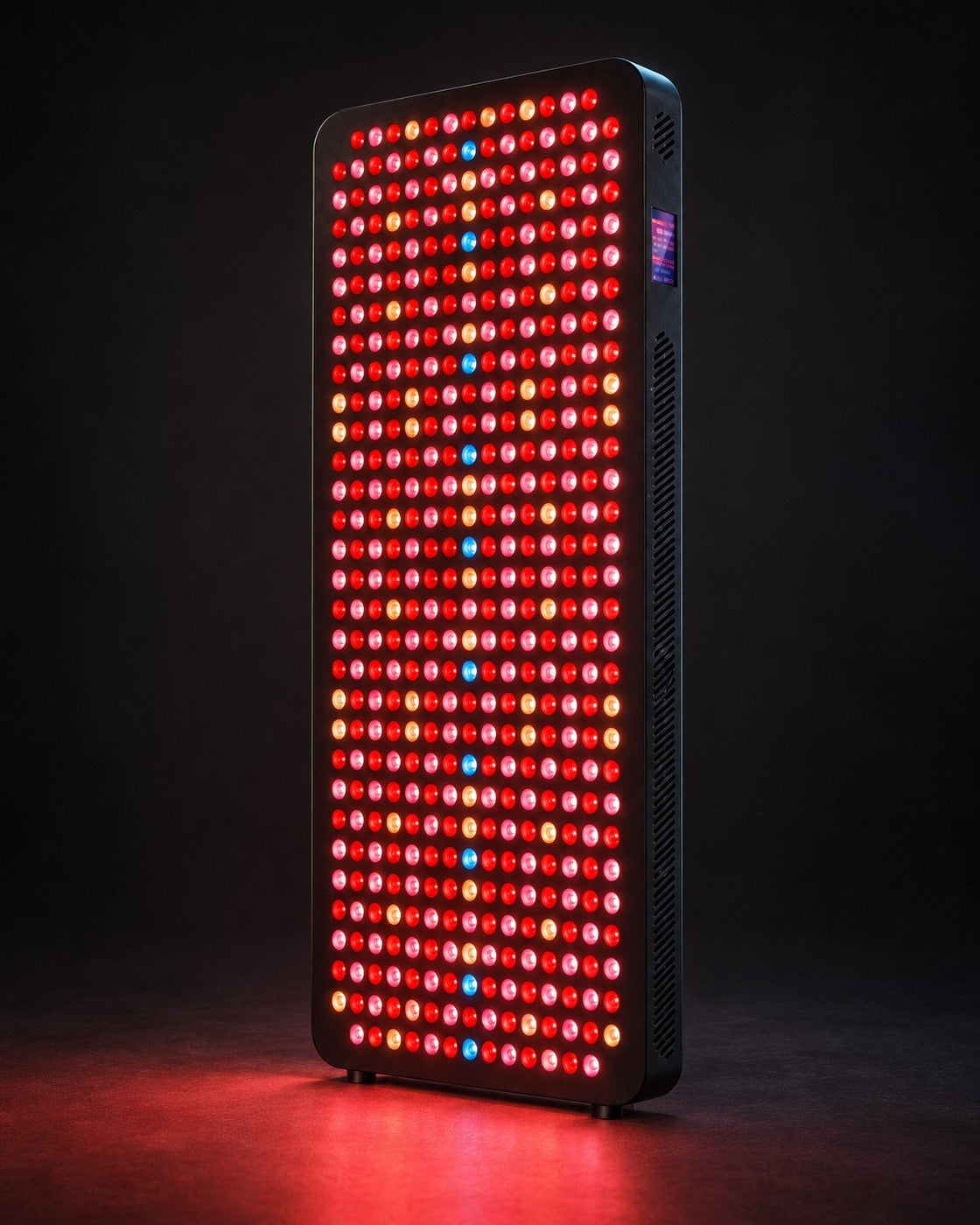 PanelsCORE to MAX · 4 sizes | 480nm | 630 · 660nm | 810 · 830 · 850nm | 940nm | – |
 MINIHandheld panel | – | 660nm | 850nm | – | – |
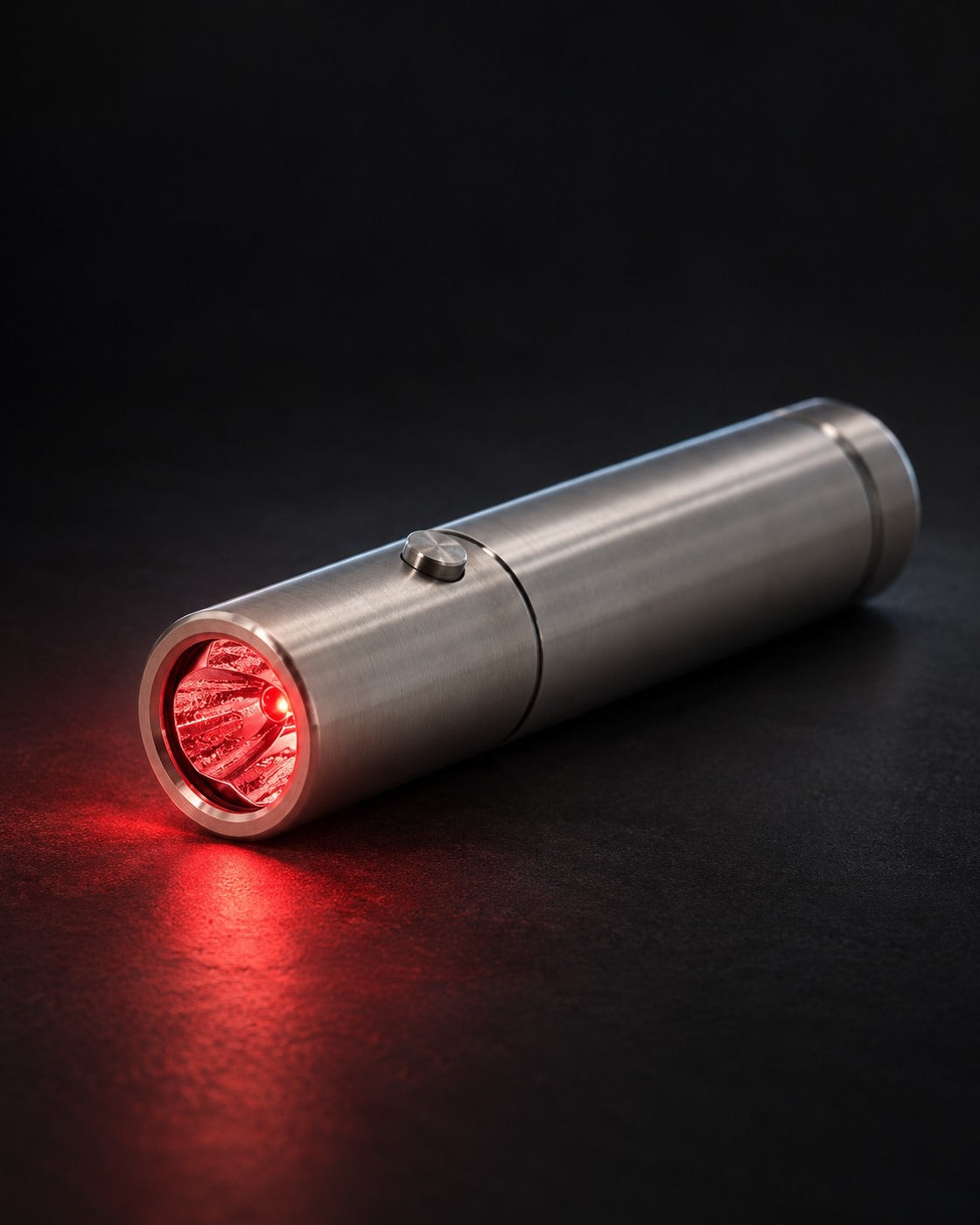 TorchHandheld | 460nm | 630 · 660nm | 850nm | 900nm | – |
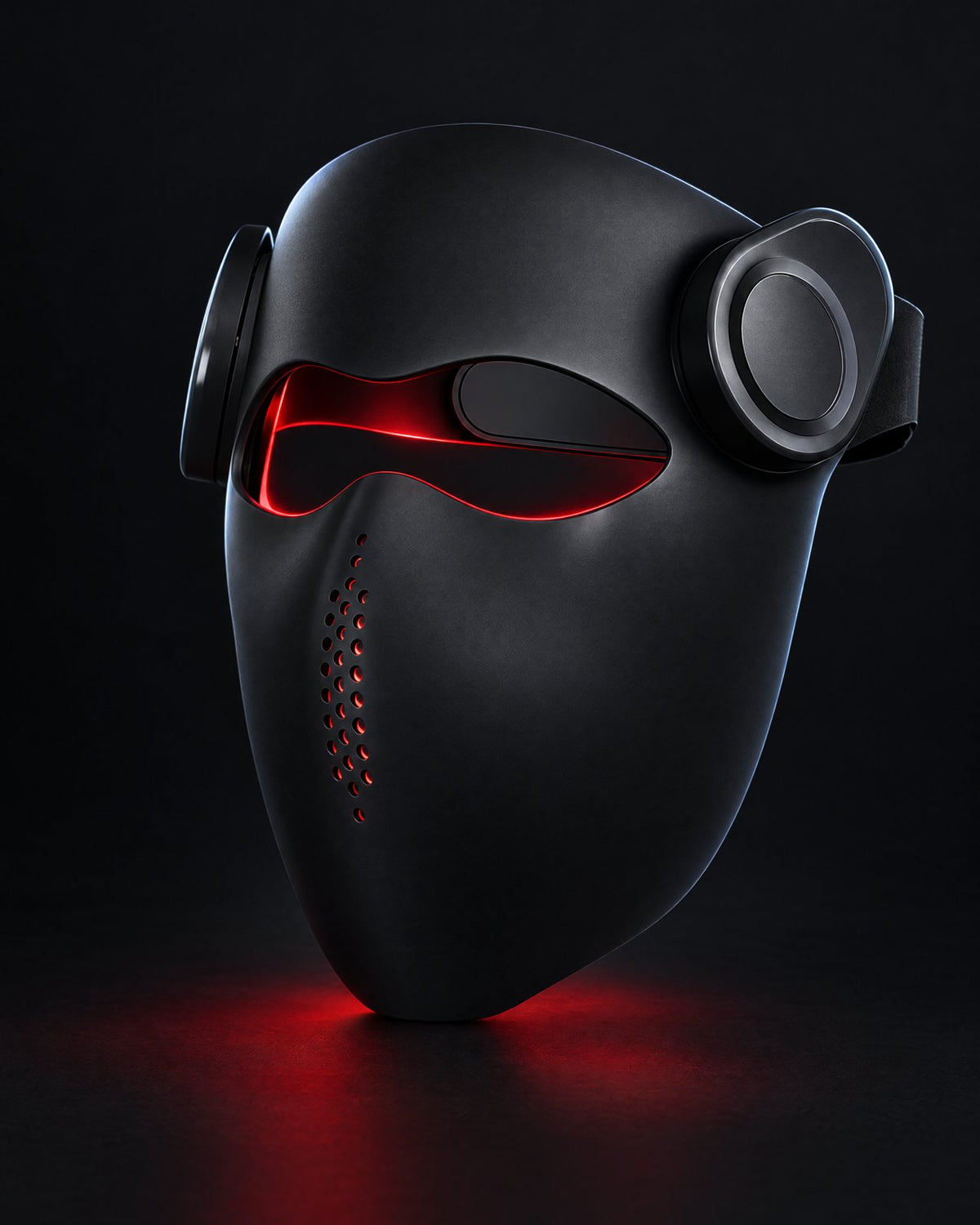 GLOWLED + VCSEL mask | 460nm | 665nm | 850nm | – | 1064nm |
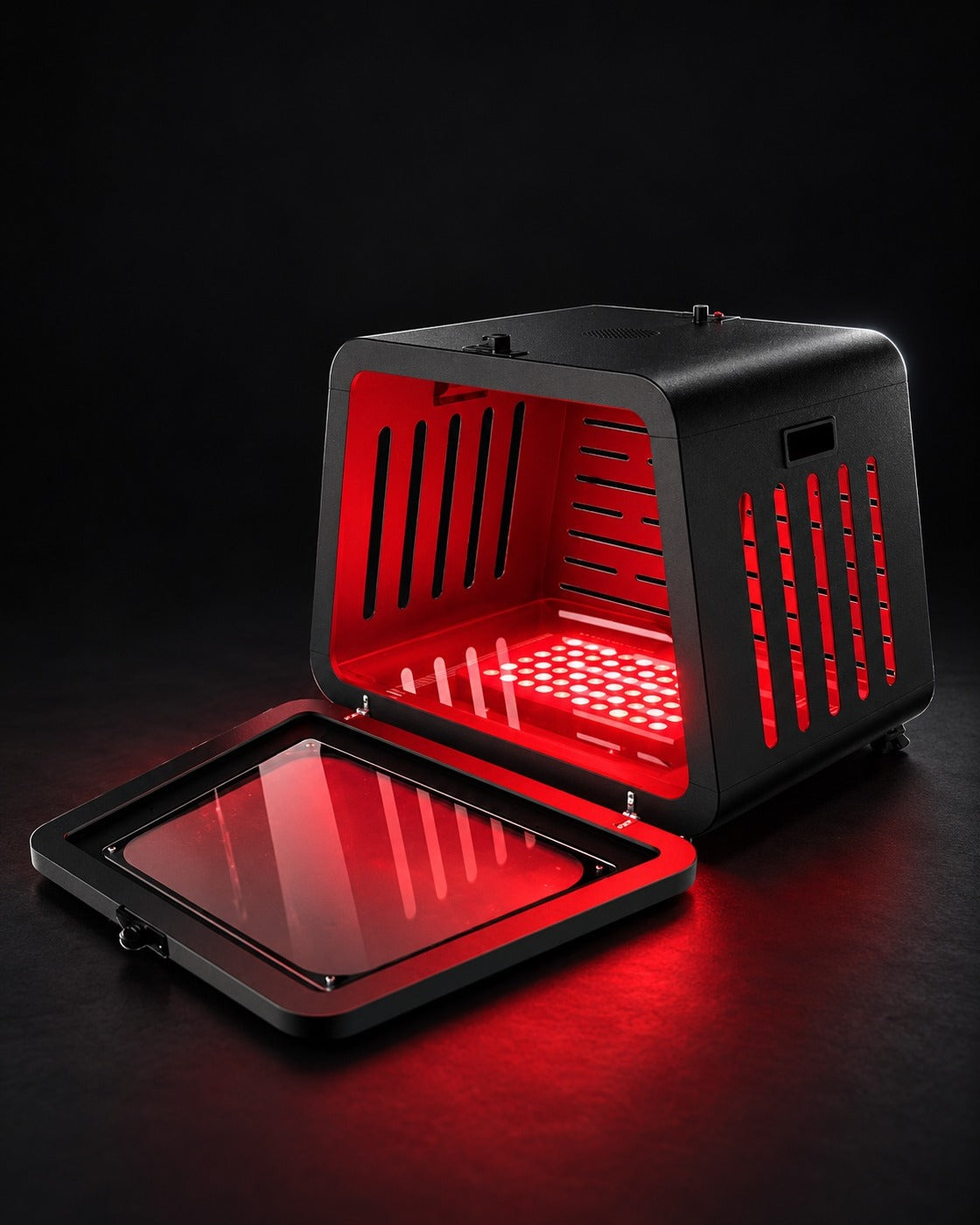 Pet deviceEnclosure | – | 630 · 660nm | 810 · 830 · 850nm | – | – |
Use itsafely.

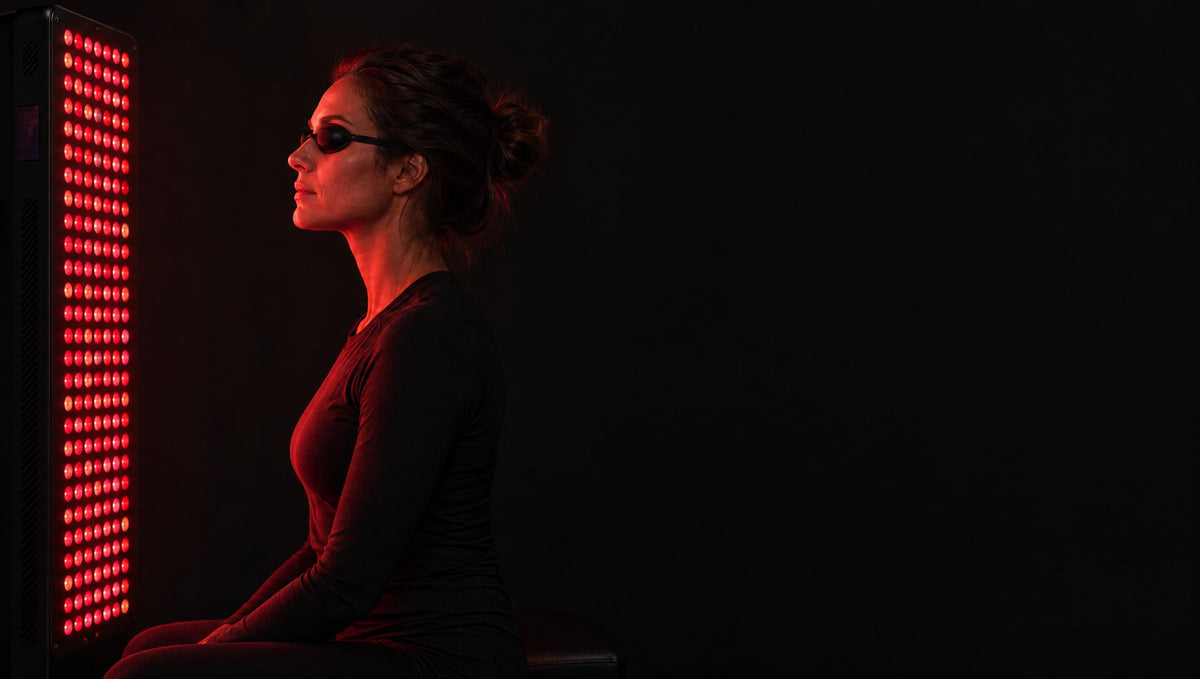
- Protect your eyesWear the included goggles with every panel and do not look directly into the LEDs.
- Check with your doctor firstIf you are pregnant, have a medical condition, or take medication that makes you sensitive to light.
- Follow the guideUse the distance and session time in your device's quick-start guide. Longer is not better.
- Stop if it feels wrongNear-infrared can feel warm. Stop if your skin feels hot, irritated or uncomfortable.
This page is general education, not medical advice. PERFORM MD devices are not intended to diagnose, treat, cure or prevent any disease.
